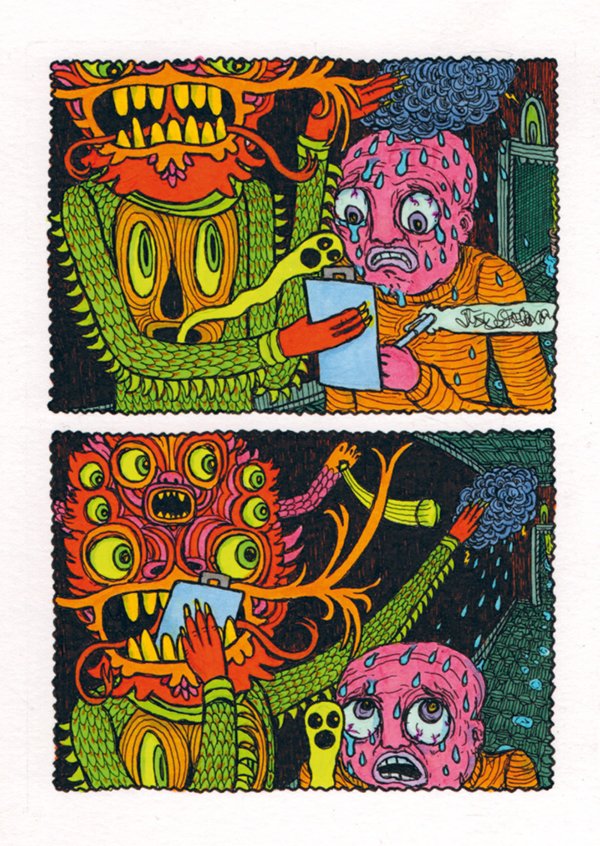
Title: š! #26 'dADa'

Publisher: kuš! Komiksi
Contributors: A. Burkholder , Brie Moreno, Cátia Serrão, Daniel Lima, Dāvis Ozols, Dunja Janković, Dylan Jones, Ernests Kļaviņš, Jaakko Pallasvuo, José Ja Ja Ja, König Lü.Q., Līva Kandevica, Maija Kurševa, Marc Bell, Mārtiņš Zutis, Olaf Ladousse, Roman Muradov, Saehan Park, Sammy Stein, Vincent Fritz, and Zane Zlemeša
Available: HERE
(Editor's Note: The following is the first of what I hope to be many contributions to this site from other writers writing about off-the-radar small press books being published today. If you're interested in contributing to this endeavor -- and getting paid to do so -- please pitch me at YCEReviews@Gmail.com or hit me up on Twitter @DanielElkin and let's see if we can work together. For now, please enjoy Austin Lanari's review. It's a good one, and I'm proud to use it to debut this new idea. It sets the perfect bar for what I am looking to feature on this site.)
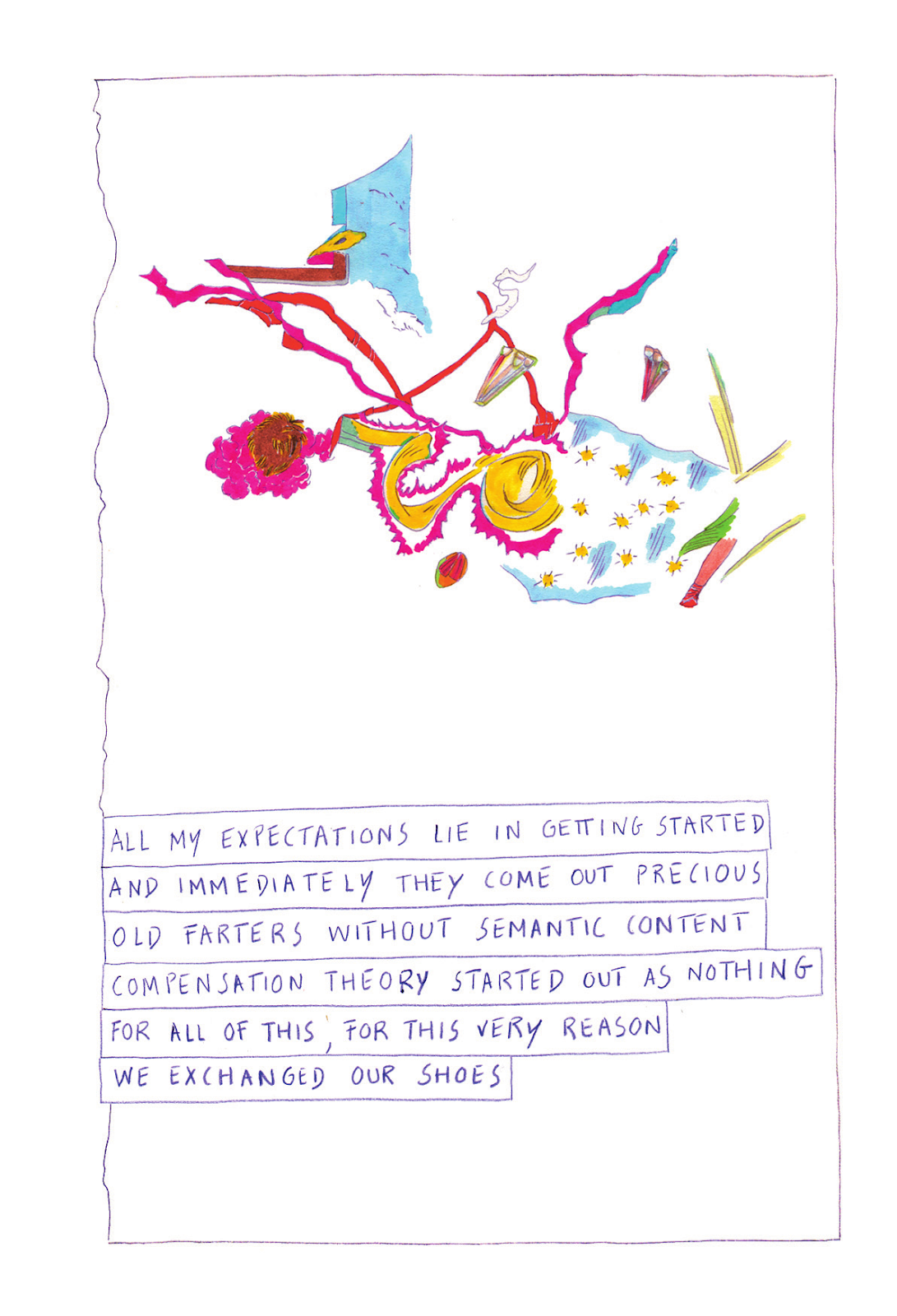
Definitions of art abound and yet, ultimately, most of us bottom out on the same Hustler-esque take: “I know it when I see it.” Yet there is some set of similarly-oriented intuitions clustered together in our respective psychologies and social spheres that dispose us to ascent easily to particular works as art, while simultaneously writing off a good chunk of the contemporary work being done. Ironically, a lot of modern art exists to challenge the autopilot that comprises our typical aesthetic experience, which is very often defined by an experience of beauty that requires very little from the viewer. Dada is anti-art for this very reason: just because we are disposed one way does not mean fine work cannot exist outside of a given aesthetic area. If our conceptions about art exist essentially unchallenged, then what better way to stoke introspection about art than with art itself.
And then what about our conception of comics?
Scott McCloud thinks they’re narrative pictures, with or without text to help. R.C. Harvey thinks the interplay between text and picture is essential. Kurt Busiek... tweets stuff.
I don’t think focusing on a definition necessarily begets prescriptivism. Understanding the things essential to any given medium allows for a fuller understanding of one’s work within that medium. Additionally, it doesn’t seem all that misleading to talk about comics as if they are sequences of images that hang together in order to evoke a specific sort of emergent meaning. Deconstructing comics, then, means not just taking apart our conceptions of beauty or of the order internal to a given work; it means dismantling the links between many individual pieces. Dada comics thus make the images tenuous representers of things in the world while simultaneously being tenuously connected to each other.
When comics and dada collide, the semantic and conceptual distance between the individual emotional need to grasp things and the broader societal habit of over-taxonomizing ways of thinking is shrunk to the width of a grain of rice and thrown under a microscope. A confrontation with the narrative autopilot that most sequential images force us into on a subconscious level immediately yields heavy scrutiny.
Like any good anthology, š! #26 gets off to a strong start with the first page of Maija Kurseva’s aptly-titled “Manifest” reading “THERE IS NO ULTIMATE TRUTH” as its header. Dadaists don’t have a monopoly on this, of course (American Pragmatists are fond of saying that there’s no capital ’T’ truth; one Pragmatist even makes an appearance in this book), but it’s a shot across the bow in terms of tone and stated aim. Kurseva sets off representational sparks in the reader, allows them to fizzle before they spin into a narrative, and repeats. There is a unity of purpose and tone, and the reader is left wondering… “how?”
And then what about our conception of comics?
Scott McCloud thinks they’re narrative pictures, with or without text to help. R.C. Harvey thinks the interplay between text and picture is essential. Kurt Busiek... tweets stuff.
I don’t think focusing on a definition necessarily begets prescriptivism. Understanding the things essential to any given medium allows for a fuller understanding of one’s work within that medium. Additionally, it doesn’t seem all that misleading to talk about comics as if they are sequences of images that hang together in order to evoke a specific sort of emergent meaning. Deconstructing comics, then, means not just taking apart our conceptions of beauty or of the order internal to a given work; it means dismantling the links between many individual pieces. Dada comics thus make the images tenuous representers of things in the world while simultaneously being tenuously connected to each other.
When comics and dada collide, the semantic and conceptual distance between the individual emotional need to grasp things and the broader societal habit of over-taxonomizing ways of thinking is shrunk to the width of a grain of rice and thrown under a microscope. A confrontation with the narrative autopilot that most sequential images force us into on a subconscious level immediately yields heavy scrutiny.
Like any good anthology, š! #26 gets off to a strong start with the first page of Maija Kurseva’s aptly-titled “Manifest” reading “THERE IS NO ULTIMATE TRUTH” as its header. Dadaists don’t have a monopoly on this, of course (American Pragmatists are fond of saying that there’s no capital ’T’ truth; one Pragmatist even makes an appearance in this book), but it’s a shot across the bow in terms of tone and stated aim. Kurseva sets off representational sparks in the reader, allows them to fizzle before they spin into a narrative, and repeats. There is a unity of purpose and tone, and the reader is left wondering… “how?”
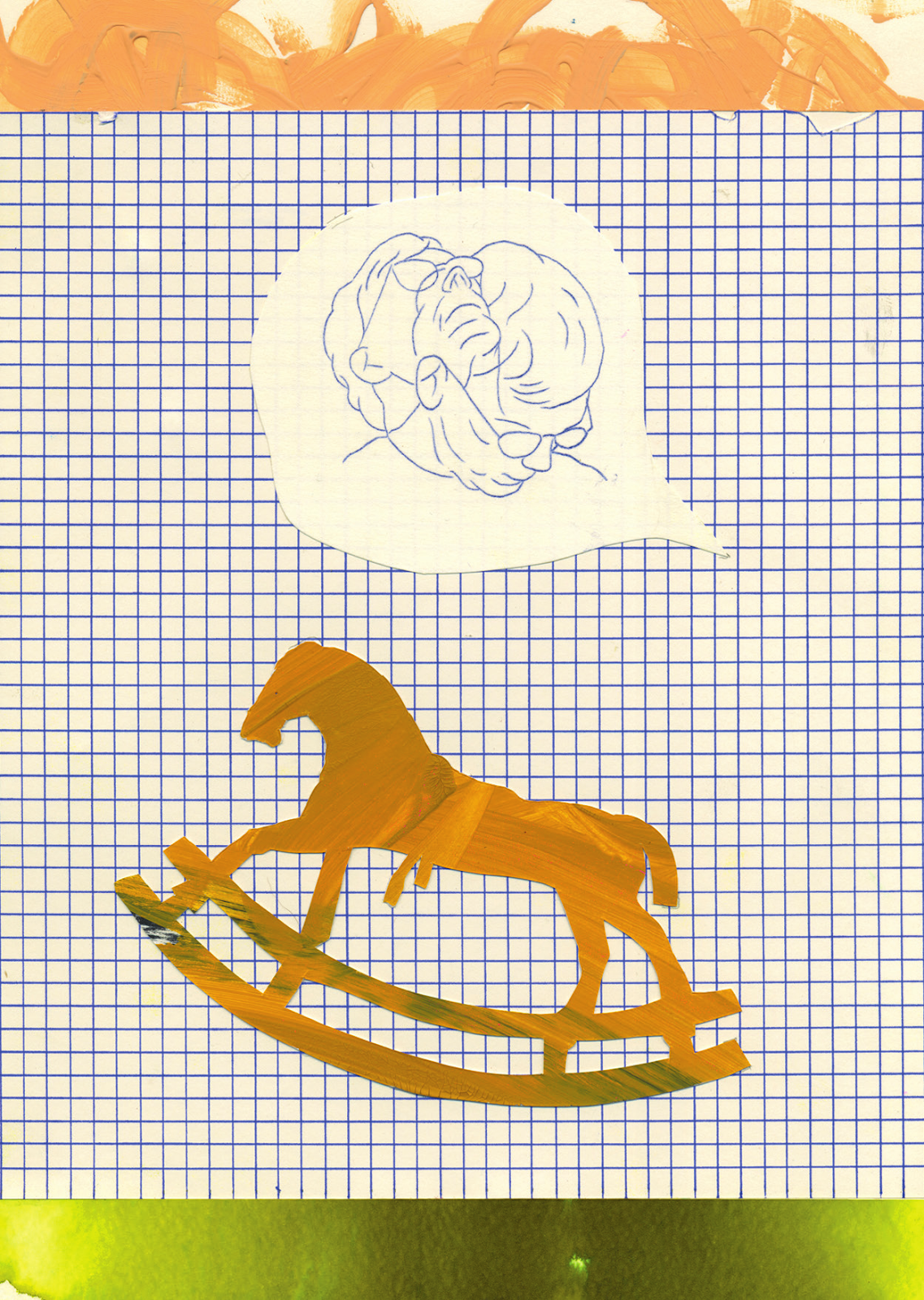
Kurseva’s comic is a beautiful, sometimes wordless ode to the best of what you can achieve with abstract juxtaposition in the comics form. A man nods in a speech bubble above the image of a rocking horse. A figure uses calipers to precisely measure one of several amorphous blobs. These not-narrative elements are hammered home because they are collaged. The fact that the elements on the page each have their own visible feel--that they each have prominent, raised, physical presence on the page--makes the juxtaposition of the elements feel tangible. These pages have subjects, and yet we as readers watch Kurseva’s pages diverge conceptually, failing to elicit meanings in the juxtapositions, even as those juxtapositions weigh heavier on each page.
Despite dada’s protest, Kurseva’s work is consistent with how I think we can understand the most challenging work being done today: it boils down to ambience. The best stuff coming out of small press publishers to the latest work of Jillian Tamaki takes our sense of a narrative woven from images and stretches out our semiotic faculty. We are forced to try and embrace--literally, hug together--a syntax hanging sporadically, leagues apart, between the images and words. In this space, via this space, meaning is augmented, warped, and thus composed in a way only comics can manage. Movies come close with their superior ability to stretch out the juxtaposition of images, but only comics let you go at your own pace and put it all on simmer, while somehow still feeling pulled to that next page turn.
Despite dada’s protest, Kurseva’s work is consistent with how I think we can understand the most challenging work being done today: it boils down to ambience. The best stuff coming out of small press publishers to the latest work of Jillian Tamaki takes our sense of a narrative woven from images and stretches out our semiotic faculty. We are forced to try and embrace--literally, hug together--a syntax hanging sporadically, leagues apart, between the images and words. In this space, via this space, meaning is augmented, warped, and thus composed in a way only comics can manage. Movies come close with their superior ability to stretch out the juxtaposition of images, but only comics let you go at your own pace and put it all on simmer, while somehow still feeling pulled to that next page turn.
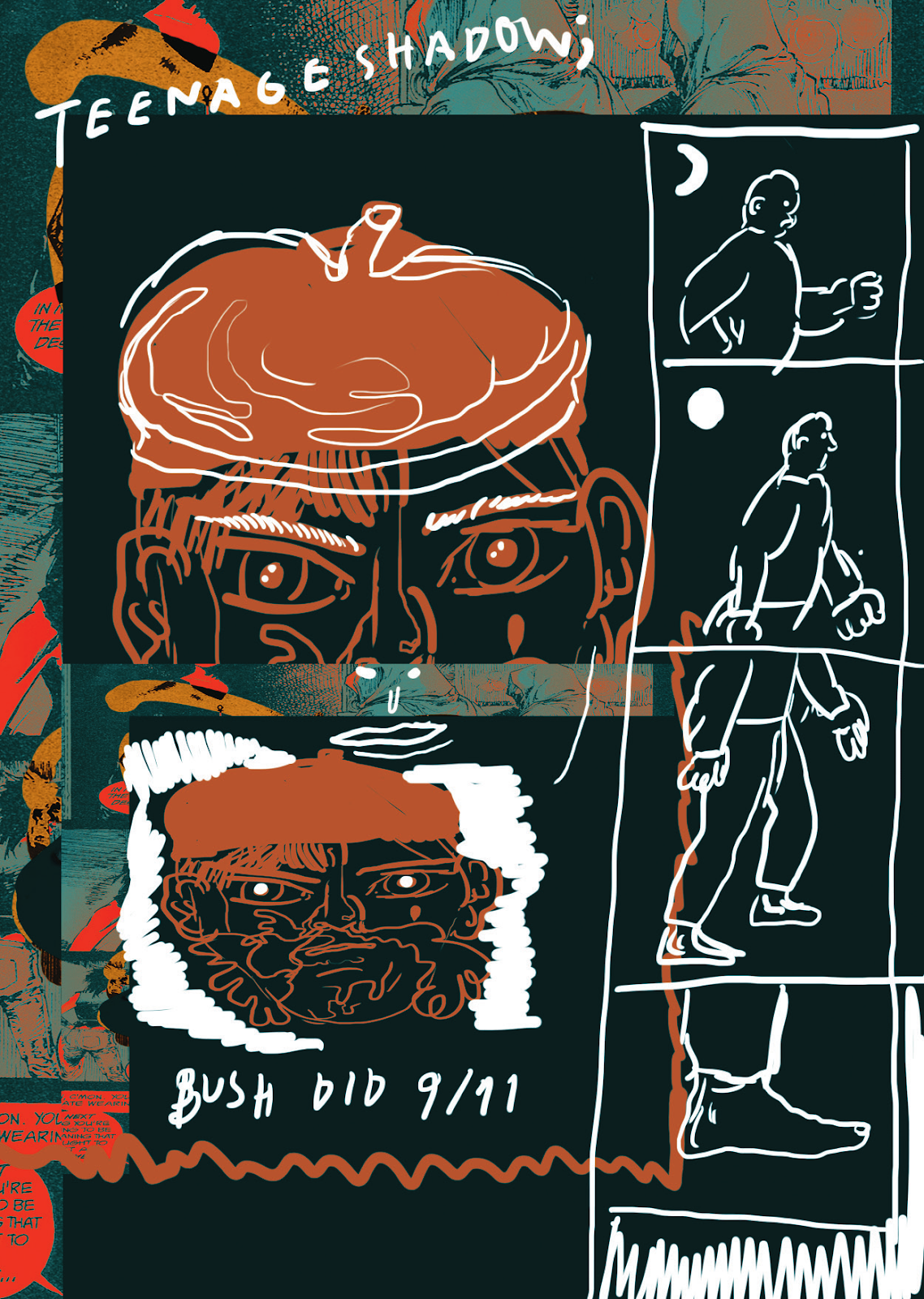
Jaakko Pallasvuo’s contribution to š! #26 inspires much more alarming, visceral reactions than his peers. As you navigate the pages of “Fables and Reflections”, it is immediately apparent how the goal of each page is to make you comfortable or uncomfortable in a distinct way, only to wrest that feeling from your mind’s grasp one page later. He starts by inverting the colors of an existing comic that he did not draw, and then stripping out everything but the black and white tones. Over this he mixes freehand drawing and uncomfortable flower collaging that varies in opacity. Other than when the borrowed comic later returns, the story is a mess of random prose and panels strewn about. Any time he deploys any of these features, he immediately switches gears, not allowing even comfort in modes of discomfort.
Pallasvuo's work here is a good approximation of the anthology itself: at its best, it confounds in ways inherent to the medium, turning juxtaposition in on itself and adding layers where it seems like there should not be any; at its worst, it throws shit at a wall to see what sticks... and not much does. While it makes sense for a dada comic not to run too far with any given structure, each page of this comic feels like it’s from a different planet, and after a few pages, I don’t know why I’m making the trip anymore.
How can we find value in the medium if not through narrative? I can think of several ways, and so can this anthology, which fluctuates wildly in its response to the question. Sometimes, the answer is straight-up eyeballing the medium itself.
Pallasvuo's work here is a good approximation of the anthology itself: at its best, it confounds in ways inherent to the medium, turning juxtaposition in on itself and adding layers where it seems like there should not be any; at its worst, it throws shit at a wall to see what sticks... and not much does. While it makes sense for a dada comic not to run too far with any given structure, each page of this comic feels like it’s from a different planet, and after a few pages, I don’t know why I’m making the trip anymore.
How can we find value in the medium if not through narrative? I can think of several ways, and so can this anthology, which fluctuates wildly in its response to the question. Sometimes, the answer is straight-up eyeballing the medium itself.
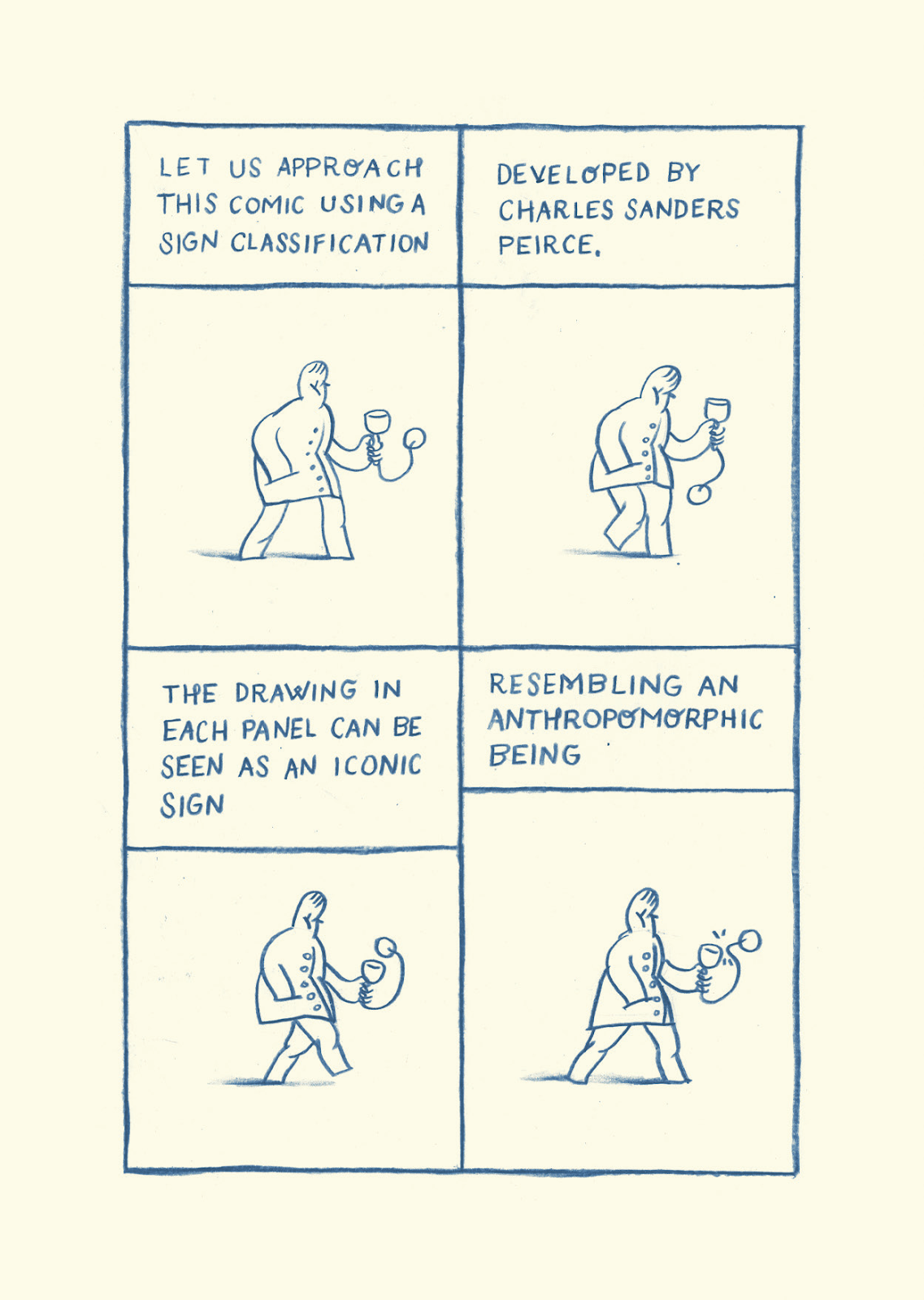
Martins Zutis does this in "Cup and Ball" when he more-or-less carries out a comic in which he describes the comic itself as the comic goes. Zutis leans into a slightly more technical impression of Scott McCloud as he explains the way in which each individual comic panel evinces meaning as an iconic sign. The more this one sat with me, the more impressed I was: Zutis drives a narrative with a description of the narrative itself. After talking about things that do not resemble that which they represent (like words), he explains how he sees a few of his drawings as embodying a particular metaphor, which is itself the abstract embodiment of meaning through resemblance. None of his observations about the form are novel or earth-shattering, but, like his line, his execution is delicate, making for a subtle meditation on the form composed with the form itself.
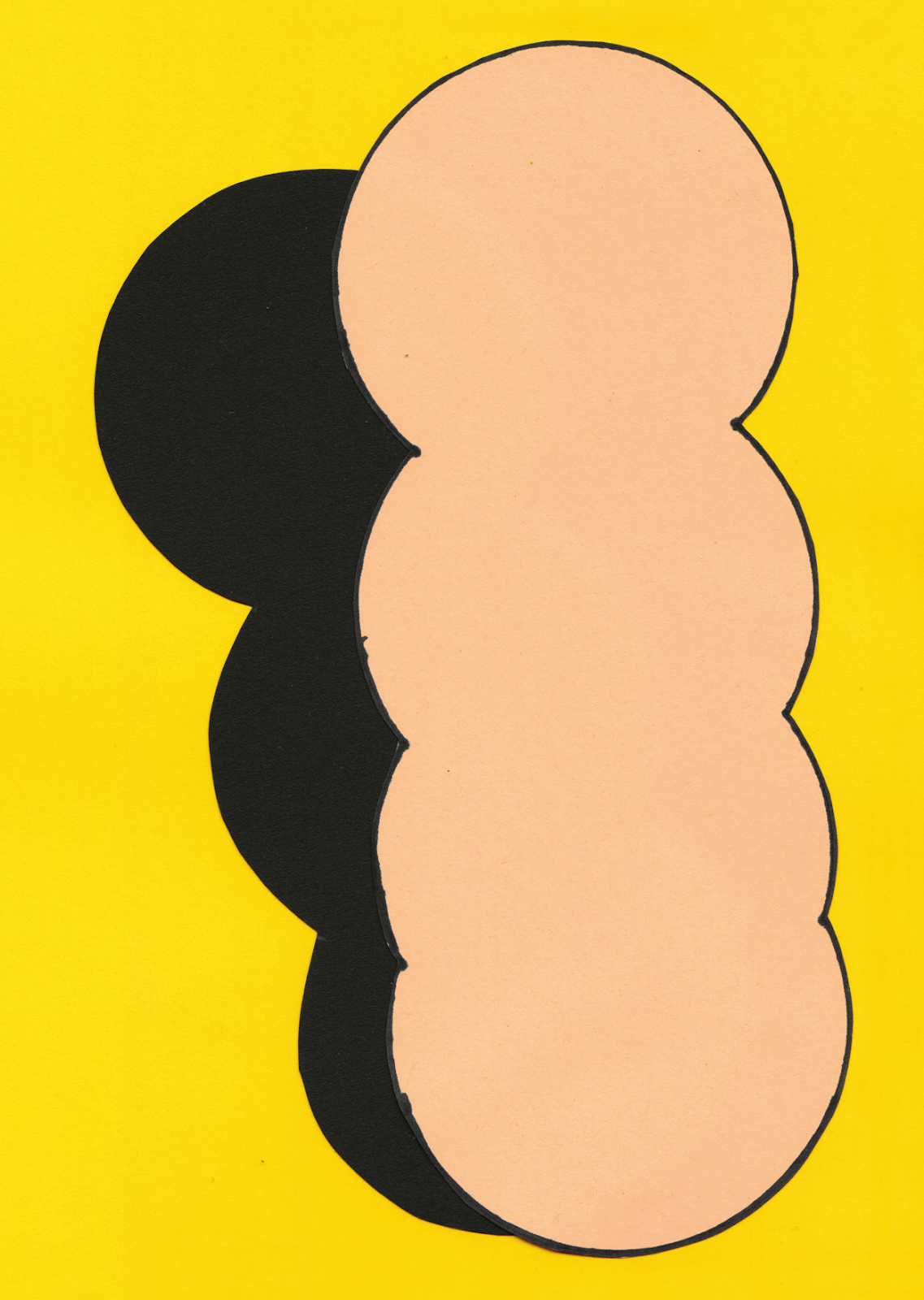
Other times, š! #26 answers the challenge of building substantial comics without narrative by scaffolding pages with colors and lines, but not together: each page alternates meat and bones. Dunja Jankovic's "A Conversation Between Black and White" is an infuriating distillation of all of the basic visual elements of comics. Here contrast is literal: one page has color, another has black and white, and only black and white. Lines come together to form shapes on one page, and then run exclusively against each other in specific directions on the next. As a reader, it's worth trying to figure out what's being asked of me when I'm faced with this kind of work. I am more likely to believe that this is a series of consecutive illustrations than a comic. While that says almost as much about me as it does about the work, if you ask someone in enough ways "what is the point of this?" eventually you will hear, "I don't know."
Imagine stringing a series of Rothkos together and being told it was a comic. Surely it isn't true just because somebody says so, but think about what the experience would be like if you knew very little about Rothko's work. That which can be impactful standing on its own is asked to carry a different semiotic burden when placed next to other images intentionally, as part of a whole greater than itself. What, then, are we as readers to make of a work that exists to undercut itself? How can it extend or inform our experience of the world if all of its energy is focused inward, with its syntax collapsing like a dying star?
Imagine stringing a series of Rothkos together and being told it was a comic. Surely it isn't true just because somebody says so, but think about what the experience would be like if you knew very little about Rothko's work. That which can be impactful standing on its own is asked to carry a different semiotic burden when placed next to other images intentionally, as part of a whole greater than itself. What, then, are we as readers to make of a work that exists to undercut itself? How can it extend or inform our experience of the world if all of its energy is focused inward, with its syntax collapsing like a dying star?

Still yet other times, š! #26's answer to value is to embrace narrative, albeit it in ways that acknowledge that the narrative itself is not inherently useful. The very idea that "good" comics stand opposed to the more confounding ones by virtue of having tidy narratives is directly challenged by work's like Burkholder's "Meet Da Blee" which hinges on one single gag and beats both the reader and Blee himself to death with it. Fritz's "An Alert and Knowledgeable Citizenry" has a rhythm to it and a singularity to its imagery that is hard not to enjoy. Sammy Stein’s “End of Dada” presents its narrative objects in such a sterile fashion as to appear like it belongs in an inflight instruction manual, synthesizing elements of nature and artifice, yet making both feel foreign.
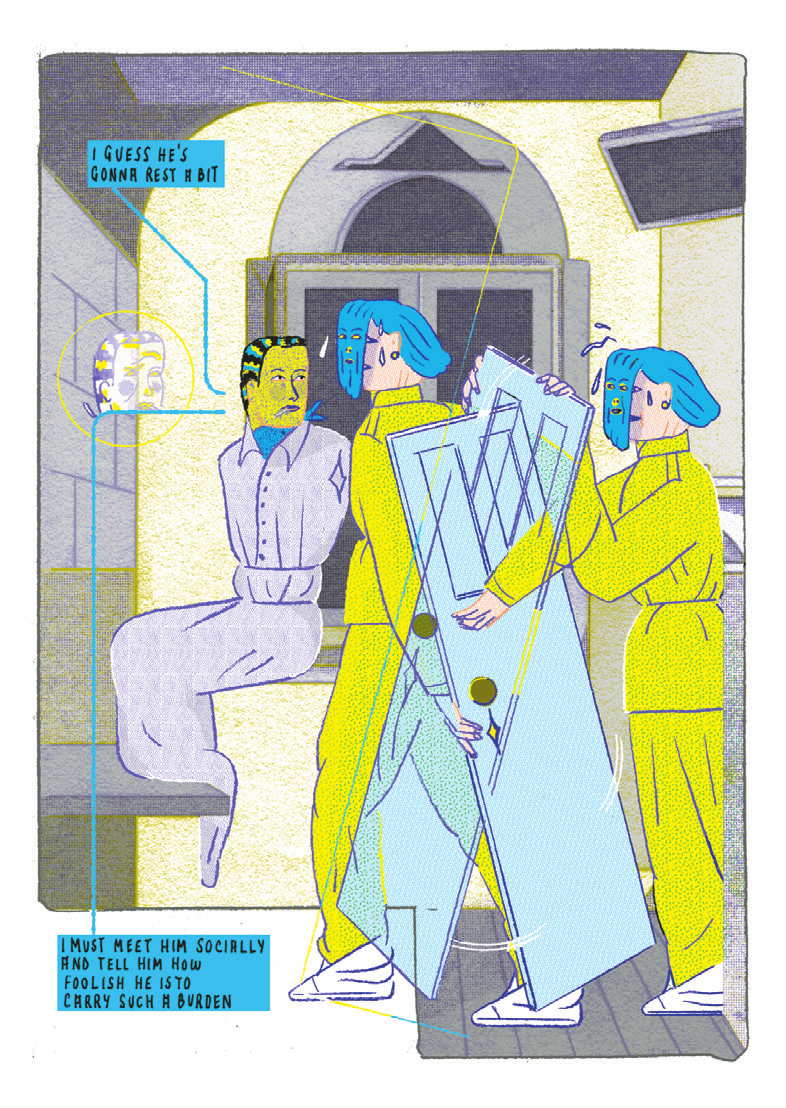
Daniel Lima scratches our itch for narrative by experimenting with time by using space, all driven heavily by a strong color identity and striking design. What’s notable about “What is a Door, Properly Speaking?” is that, in terms of dialogue, it is a word-for-word remake of this Krazy Kat strip. Lima took this already surrealistic scene in which Krazy ponders why door mouse carries a door around and injected surrealism into the very fiber of a comic’s structure. In the original strip, backgrounds constantly change, and yet Lima heightens the visual surrealism by carrying out this cubist waltz in a single confined space in which only objects in the foreground move, and almost always in unexpected ways.
It is hard to capture the breadth of ways in which this particular edition of š! chose to challenge readers. While individual comics shine, the nature of all of this work qua Dada is meant to be oil to the water that is a cohesive reading experience. The emulsification of the work largely depends on the reader’s patience and willingness to come at the anthology from an angle that works for them. Initially, I felt like I was fighting pretty hard just to get some semblance of a holistic take on the book. It was only on my third or fourth time through that I started to appreciate a scattering of choices made by specific artists, and those choices helped illuminate more obtuse work throughout the book.
Eventually, I realized that this is actually how I read all anthologies, and not just the ones where a stack of milk cartons in a giant tube sock is getting laid. Where I originally took the question at the core of this book to be, “how can we find value in comics without narrative?” a more true-to-dada question that readers will arrive at, allowing for some patience, is “how can we talk more organically about the space between what’s on the page and how we make it work in our heads?” Narrative, where it emerges in most comics, is just one way that sequences of images can connect with people. It is linguistic in a rigorous sense, which also means that it tends to be one of the least interesting ways a comic can connect with us, since it requires no effort on the reader’s part.
Of course, even when a work is driven by narrative, there is still much more going on between the work and the reader than meets the eye, if only they allow themselves the time to marinate in that space between the them and the work. Challenging work makes it easier to enter that space, but it is also quicker to frustrate readers. Pushing through that frustration doesn’t mean assenting to the excellence of all abstract art. Instead, it means the difference between merely pointing at artwork and having an intellectual and emotional dialogue with it, even if the only fucking thing it says back is “dada.”
It is hard to capture the breadth of ways in which this particular edition of š! chose to challenge readers. While individual comics shine, the nature of all of this work qua Dada is meant to be oil to the water that is a cohesive reading experience. The emulsification of the work largely depends on the reader’s patience and willingness to come at the anthology from an angle that works for them. Initially, I felt like I was fighting pretty hard just to get some semblance of a holistic take on the book. It was only on my third or fourth time through that I started to appreciate a scattering of choices made by specific artists, and those choices helped illuminate more obtuse work throughout the book.
Eventually, I realized that this is actually how I read all anthologies, and not just the ones where a stack of milk cartons in a giant tube sock is getting laid. Where I originally took the question at the core of this book to be, “how can we find value in comics without narrative?” a more true-to-dada question that readers will arrive at, allowing for some patience, is “how can we talk more organically about the space between what’s on the page and how we make it work in our heads?” Narrative, where it emerges in most comics, is just one way that sequences of images can connect with people. It is linguistic in a rigorous sense, which also means that it tends to be one of the least interesting ways a comic can connect with us, since it requires no effort on the reader’s part.
Of course, even when a work is driven by narrative, there is still much more going on between the work and the reader than meets the eye, if only they allow themselves the time to marinate in that space between the them and the work. Challenging work makes it easier to enter that space, but it is also quicker to frustrate readers. Pushing through that frustration doesn’t mean assenting to the excellence of all abstract art. Instead, it means the difference between merely pointing at artwork and having an intellectual and emotional dialogue with it, even if the only fucking thing it says back is “dada.”

Austin Lanari is a programmer by day and a writer by day also. He likes to sleep at night. He’s got a master’s in Philosophy and he’s gainfully employed, so shut up. You can find his writing on Comics Bulletin, Loser City, Comic Bastards, and mostly these days on his own site at http://fogupsomecomics.com . Follow him on Twitter @AustinLanari.