July 31, 2016

ICYMI -- Small Press Comics Criticism and Whatnot for 7/25/16 to 7/31/16

Highlighting some great small press comics criticism being published, as well as other random things that have caught my eye over the past week.

COMICS CRITICISM

* Andy Oliver on Samuel C. Williams' AT WAR WITH YOURSELF, an examination of living with PTSD presented in "a style that lends an everyday immediacy to extraordinary circumstances but one that aptly reminds us of the reality that the discussion is rooted in."

* Alex Hoffman writes about Sarah Bowie's FOURTEEN EUROS IN PRIMARK, a book totally off my radar, but one that, given Hoffman's review, I really want to add to my collection.

* Tom Spurgeon shows us all how to write a short review of a good book by taking a look at Dustin Harbin's self-published minicomic, DIARY COMICS #5 .

* Not necessarily an interview, over on The Quietus, Alec Berry takes a look at KRAMERS ERGOT and talks with its editor, Sammy Harkham, who saves the very best line for the end of the piece. 

* Ardo Omer on Hannah Blumenreich's SPIDEY ZINE which she calls "young, expressive, dorky, and loose." Which seems like the right kind of praise for this sort of thing.

* John Seven on THE INCANTATIONS OF DANIEL JOHNSTON which seems like one of those vehicles tailored perfectly for the art of Ricardo Cavolo. 

* Megan Purdy takes a look at the aesthetic behind Kelly Kwang's FRONTIER #12. 

* Austin Lanari struggles with his critical reaction to GULAG CASUAL by Austin English. I'm really proud to have been able to publish this for Comics Bulletin, as Lanari examines both the book and the idea of what it means to write a critical review of something about which he had such a dichotomous aesthetic reaction to.

* Get a load of Etelka Lehoczky talking about MINICOMICS over on NPR, calling it a "thriving and diverse genre". 


WHATNOT 

* This great conversation between BECCA TOBIN and BRANDON GRAHAM over smoothies in Vancouver is all you need to listen to today.

* Andy Kunka and Derek Royal talk to JOHN PORCELLINO about his latest issue of King Kat. One of the more interesting parts of this conversation is how Porcellino compares constructing his minicomics to a musician sequencing the tracks on an album. Also, it's just always great to listen to Porcellino talk about his work. 

* Sean Witzke talks to everybody's favorite guy in comics, TUCKER STONE, about 10 years of his site, Factual Opinion. If you scroll to the end, there are some great shout-outs to Tucker from all sorts of spectacular people.

* Not really anything to do with Small Press concerns, but Chase Magnett talks about VARIANT COVERS which is one of those things that I will never be able to understand other than something that is both a gross cash grab and a vestigial tail of the speculator culture that destroyed corporate comics in the 90s. 

* The artist CHAD WOOD has a new website that highlights his "nostalgically comforting and ironically amusing" work.

July 25, 2016

It's No Game -- A Short Review of CASANOVA: ACEDIA #6


Last week, in the midst of all the hubbub that was SDCC, I had my short review of Matt Fraction and Fabio Moon's CASANOVA: ACEDIA #6 run over on Comics Bulletin.


I started writing about this series comparing this iteration of Casanova Quinn to Ziggy Stardust and have been infusing all my reviews with Bowie lyrics throughout. 

Imagine my heart skip moment when I saw this panel:


July 17, 2016

ICYMI -- Small Press Comics Criticism and Whatnot for 7/10/16 to 7/17/16

Highlighting some great small press comics criticism being published, as well as other random things that have caught my eye over the past week.

COMICS CRITICISM

* Hillary Brown on Noah Van Sciver's new Fantagraphics release DISQUIET. She claims it "isn't unrelenting in its quest to make you uncomfortable" -- which is, perhaps, an encapsulation of Van Sciver's entire oeuvre.

* Rebecca Fulleylove on Beni Bischoff's "bonkers new book" titled RAMBO. Is it art? Is it comics? Is it both? Does it matter? It's bonkers! 

* Annie Mok on Lisa Hanawalt's HOT DOG TASTE TEST that is "best enjoyed in little sips, perhaps on the toilet"  which may be my new favorite way to write about comics.

* Alex Hoffman reviews 1944 by Hanneriina Moisseinen, part of the mini-kus! line from the Latvian publisher, Kus!

* Alenka Figa reviews Sage Coffey's zine IF IT WERE SOCIALLY ACCEPTABLE which seems like one of those slow-builds that pull you in and then gut-punches you with a reality check.

* Mike Sterling has been looking back at GOOD COMICS FROM THE BLACK AND WHITE BOOM which is a part of comics history that really deserves a lot more attention and exploration, especially in terms of how it worked in the marketplace and how these books relate to what is going on in the current small press scene. 

* J.A. Micheline's IN DEFENSE OF THE 10/10 REVIEW

WHATNOT 

* Tom Spurgeon re-ran his 2013 interview with GENEVIÈVE CASTRÉE who passed away earlier this week. 

* You can also read Naomi Fry's interview with CASTREE. 

* Finally, Rob Clough's remembrance of GENEVIÈVE CASTRÉE best sums up why we will all mourn her loss. 

* Women Write About Comics is launching its own ZINE, Secrets of the Goat People, and is looking for submissions of fiction, prose, and comics from women and non-binary people. If they use the same editorial standards that they do for their site, then this is sure to be pretty spectacular. Deadline for submission is August 6th

* Joseph Kyle Schmidt talks to JANELLE ASSELIN about romance comics, the direct market, Kickstarter, and being a publisher. Also, they talk about The Red Virgin and the Vision of Utopia!

* Sarah Mirk talks to MAGDALENE VISAGGIO about Kim and Kim, inspiration, and LGBTQ representation in print comics 

* SARAH HORROCKS talks about becoming a great comic writer and artist and crushing your enemies. All of these things she does pretty impressively.

* Andy Oliver's SMALL PRESS DAY 2016 -- Looking back on a glorious day celebrating self-publishing, micropublishing, and DIY culture in the UK and Ireland. My hope is that it has continued success throughout the years and, perhaps, takes on a life of its own over here in the States.

* Chase Magnett talks about the pleasures and pitfalls of AUTOBIO COMICS and the bravery it takes to offer the world a slice of your life. It's an idea that I've been kicking around in my head for a number of years: Even if a comic is crap, you still have to respect the temerity it takes to undertake the endeavor. Most of us aren't even close to being that brave.

* A.D. Andrew's EVEN DOING ACADEMIC RESEARCH ON VIDEO GAMES PUTS ME AT RISK 

* Armin Rosen ponders the experience of BOB DYLAN's recent live performance in Queens. 

* THREE POEMS by Allison Cobb

July 11, 2016

Tiny Pages Made of Ashes -- July 8, 2016

Tiny Pages Made of Ashes is the 
small press comics review column I put together 
at Comics Bulletin.


This week features three reviews:


A CITY INSIDE
by Tillie Walden
Published by Avery Hill

OTHER SELVES
by Theo Ellsworth

July 10, 2016

ICYMI -- Comics Criticism and Whatnot for 7/3/16 to 7/9/16

Highlighting some great comics criticism being published, as well as other random things that have caught my eye over the past week.

(Note: I was off grid for most of this week, so this list was compiled last minute and I'm sure I missed a bunch of great stuff)

COMICS CRITICISM

* Greg Hunter's review of Rebekka Dunlap's DREAM TUBE tries to break down this really complex set of stories by framing each of them into what they are reminiscent of.

* John Seven reviews Sophie Campbell and Erin Watson's SHADOWEYES which he calls "one of the most enlightened comics" he's had "the pleasure of reading".

* Hillary Brown reviews Tony Millionaire's MAAKIES: DRINKY CROW DRINKS AGAIN and I'm pretty sure she liked it??

* You know I'm rushing through this list when I include Nick Gazin's COMIC BOOK LOVE-IN -- really obnoxious writing about some great books. Think of this as "exposure" to what not to do, and my promise never to link there again.

WHATNOT 

* Alex Dueben has this really interesting conversation with FRANK VIVA about his new book, Sea Change

* Rachel Davies interviews JULIA GFRöRER about context, collaboration, and working with themes

* Chase Magnett answers the question: "WHAT MAKES BATMAN V SUPERMAN A BETTER FILM THAN CAPTAIN AMERICA: CIVIL WAR"

* Ray Sonne chooses three women writing INSPIRING AUTOBIO COMICS 

*Ijeoma Oluo's WHY IT'S IMPORTANT TO CHALLENGE THE POWER OF GATEKEEPERS

July 5, 2016

Review: Josh Hicks' GLORIOUS WRESTLING ALLIANCE


I wrote about Josh Hicks' GLORIOUS WRESTLING ALLIANCE for Comics Bulletin.


Veering off into wrestling inspired imagery of the poetry of Death Machine, the limitations of the women’s league, and new personas for Gravy Train (“I don’t want to be remembered as a Giant Sauce Receptacle forever!”) Hicks circles around questions of identity in this bonkers tale of kayfabe and marketing. If your persona is at odds with your individuality, who are you really?
How strong must your ego be to survive?

July 3, 2016

ICYMI -- Comics Criticism and Whatnot for 6/26/16 to 7/2/16

Highlighting some great comics criticism being published, as well as other random things that have caught my eye over the past week.

COMICS CRITICISM
* Since 2011, Retrofit Comics has been publishing amazing books by a diverse and talented group of cartoonists, consistently pushing the envelope of what is possible in the medium. Over on The Beat, John Seven takes a look at some of RETROFIT'S EXCELLENT COMICS BY WOMEN 
* Speaking of Retrofit, Alex Widen does a short review of Leela Corman's WE ALL WISH FOR DEADLY FORCE
* A powerhouse quartet of comics critics, Shea Hennum, J.A. Micheline, Caitlin Rosberg, and Oliver Sava, have a thick and thoughtful conversation about the cultural impact and contextualization of RAINA TELGEMEIER'S SMILE 
* Christopher M. Jones turns his perceptive critical eye onto all the problems that exist in the much-lauded SWALLOWING THE EARTH by Osamu Tezuka
* Nadia Bauman writes about CODENAME BABOUSHKA AND CULTURAL APPROPRIATION. In it, she introduces you to the term razvesistaya kliukva ("a branchy cranberry tree") and how this applies to fiction that exploits stereotypical views on Russia
* Alex Hoffman parses Josh Cotter's SKYSCRAPERS OF THE MIDWEST in a note-like, observational way. There's something nice about this format, sort of a conversation between a critic and a reader, that allows you to join in as you read it
* I guess it IS half-way through 2016, so, in a way, it makes some sense to post something like this (other than, you know, click-bait), so here's Abraham Riesman's THE BEST COMICS OF 2016 (SO FAR). This is a pretty all-over-the-place kind of list, which calls into question Riesman's own sense of aesthetic (if you ask me), but the fact that he includes Nick Drnaso's Beverly shows he does have some taste (which he quickly undermines by including Dark Night, but that's a whole 'nother kettle of fish)


WHATNOT

* Matt O'Keefe interviews writer CHRIS SEBELA about his work on We(l)come Back and Heartthrob. Unfortunately, there is no mention of #PoolDisaster2016
* Sean Ford talks to GABBY SCHULZ about Sick, a book which, after listening to this conversation, I really need on my shelf. 
* Robert Kirby has a breezy, casual, and fascinating conversation with MARINAOMI about her new book, Turning Japanese, her drawing style, and book tours
* Take a listen to this great conversation between cartoonist Tillie Walden, Avery Hill Publishing co-publisher Ricky Miller, and founder of TheLesbianReview.com Sheena about WORKING WITH AN EDITOR 
* Katie Skelly has posted THE COMPLETE AGENT 73 which was written by her Trash Twins Team-mate, Sarah Horrocks.
* Caitlin Rosberg writes an interesting but kind of unfocused piece on THE GROWTH OF SMALL PRESS AND SELF-PUBLISHED COMICS which rails against the Eisner's (to an extent) and celebrates the efforts of both C. Spike Trotman and Beyond Press 
* LOU REED AND LAURIE ANDERSON'S THREE RULES FOR LIVING WELL
* Talynn Kel's WHEN WHITE PEOPLE CONSUME BLACKNESS FOR PERSONAL GAIN discusses Cultural Cannibalism and the intrinsic violence therein 
* Am I wrong for being confused by the tone of Hermione Hoby's piece in the New Yorker about GENESIS BREYER P-ORRIDGE? It seems kind of condescending, but I'm not sure if it is condescending towards its readers or its subject? Help me out here.

July 2, 2016

Tiny Pages Made of Ashes -- July 1, 2016

As part of my new role as small press editor for Comics Bulletin, I've revived the dormant Tiny Pages Made of Ashes column -- reviews of small press books.


It features 3 reviews written by David Fairbanks and me:

HELLBOUND LIFESTYLE by Alabaster Pizzo and Kaeleigh Forsyth (published by Retrofit Comics)

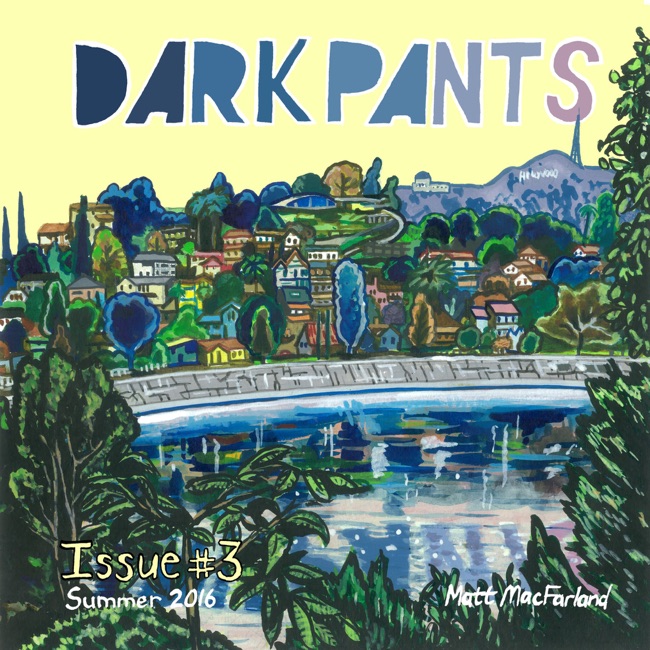
DARK PANTS #3 by Matt MacFarland

HANDBOOK by Kevin Budnik


June 27, 2016

Don't Do What Dini Does: A Reactionary Review to DARK NIGHT: A TRUE BATMAN STORY

So. Over on Comics Bulletin, I wrote a review of Paul Dini and Eduardo Risso's new autobiographical comic out of Vertigo books called DARK NIGHT: A TRUE BATMAN STORY.

It is one of the first reviews where I felt it necessary to organize around a thesis statement.

Dark Night: A True Batman Story lionizes the fragile masculinity behind old guard comics fandom and perpetuates all that is wrong in the closed world of corporate comics culture.

June 26, 2016

ICYMI -- Comics Criticism and Whatnot for 6/19/16 to 6/25/16

Highlighting some great comics criticism being published, as well as other random things that have caught my eye over the past week.

COMICS CRITICISM

* If you read nothing else on this list, read Claire Napier's MANIPULATION OF MANHOOD: JULIA GFRÖRER'S COMIC BOOK MISANDRY 
* Rob Kirby on Luke Howard's TALK DIRTY TO ME 
* Nick Hanover on Rich Tommaso's SHE WOLF #1 
* John Seven on Patrick Kyle's DON'T COME IN HERE 
* The Trash Twins (Katie Skelly and Sarah Horrocks) talk about Frank Miller's SIN CITY 
* Alex Hoffman on Daishu Ma's LEAF

WHATNOT 

* Julia Wright interviews GINA WYNBRANDT 
* Alex Dueben interviews SIMON HANSELMANN 
* Alexander Lu interviews ULISES FARINAS
* Samantha Maldonado profiles ANDREA TSURUMI 
* Chase Magnett's EVERY COMIC IS A LITTLE BIT RACIST SOMETIMES
* Jake Marmer on the new documentary about poet BOB KAUFMAN, And When I Die, I Won't Stay Dead

June 20, 2016

Battling With The Asshole Brain: A Review of I FEEL WEIRD by Haleigh Buck

I FEEL WEIRD
By Haleigh Buck
Published by Hey Boy! Press
Available Here
Haleigh Buck makes comics I like to read. Raw, confessional, naked, powerful, oftentimes funny, poignant, and full of truth, Buck’s comics maneuver through her own understanding of herself in her world and, in her furtive gestures, end up touching upon the universal. Her thick-inked pages belie the smudges and obfuscation we shroud ourselves in on our bad days. Her cartooning is damp with the desperate sweat stench that pervades our bedsheets after having swaddled us during dark days when our depression won’t let us leave our rooms. Her panels and lettering are jagged with the electricity of anxiety and the charge of panic attacks.

Nobody draws a thick grove of trees as ominous and inviting as Haleigh Buck.

Her latest book is I Feel Weird, a thirty-two page collection of diary comics she says were “written on (her) ‘good days’ after a mental breakdown in late 2015,” and which chronicle “the beginning to a long, looonnggg story of trying to recover from mental illness.”
This is a visceral, confessional, and ultimately healing comic book. In panel after panel, Buck captures her despair and her struggles. From a dog-interrupted suicide attempt (“Once you’ve accepted death as an option, it’s always the first place your mind goes to when you have really hit rock bottom”), to the unbelievable harassment she receives at the hands of an emergency room staff, to the healing safe space of her friend’s folk’s house, to her time working at Atomic Books in Baltimore, to her struggles with medication, all of it is here, presented fervently and unembellished. Buck places the reader beside her as she feels, reflects, and recounts. It would be almost overwhelming were it not what it is, a testament to an artist compulsively using her skills to understand.

And it is this that transforms I Feel Weird from diary to art -- that liminal space between experience and transmutation -- from immediacy to contemplation in the moment of creation. By the very existence of these pages, the reader carries through, confronted with the emotional crotch-kick of Buck’s narrative, knowing that through her art she has put distance to her inner horror and has reconstructed it into something for us all.
At the end of the book, Buck writes, “My hope is that this comic will help someone. Mental health is not a fun battle. It’s even less fun fighting it alone.” By publishing I Feel Weird, Buck uses her struggles as a rallying cry. It’s the open hand of a friend stretched out to help the rest of us get off the ground. It reminds us that, even in the depths, there’s still “shit to do” and that it is only us who can do it.

Unlike the pap that pervades some small press autobio comics, I Feel Weird is neither pedantic nor pathetic. It never speaks down nor stands on a soapbox. It’s not look-at-me, it’s look-at-us. It’s truth and it’s important because it exists. It reminds us that no matter what our asshole brains tell us, we are capable of spectacular things, things that will remain undone until we do them, and that we are the only ones who can make them a reality.

Do this. Go buy I Feel Weird here.

Other reviews of books by Haleigh Buck:

You can also follow Haleigh Buck:
On TUMBLR
On her BLOG
(someone needs to tell her to get on Twitter -- or maybe not -- it can be a terrible place sometimes)

June 19, 2016

ICYMI -- Comics Criticism and Whatnot for 6/12/16 to 6/18/16

Highlighting some great comics criticism being published, as well as other random things that have caught my eye over the past week. 
Before getting into Criticism and Whatnot, I'd just like to extend a Happy Father's Day to all those Dads out there (especially mine) who are out there being spectacular and teaching their children to be warm, empathetic, thoughtful, and kind. 

You're all Daddy Cool.


COMICS CRITICISM


* Nicole Rudick on Julie Doucet's CARPET SWEEPER TALES
* Rob Clough's survey of almost every release by RETROFIT COMICS
* Emma Houxbois on CLEAN ROOM #9
* Bob Levin on Austin English's GULAG CASUAL
* Alex Hoffman on Kevin Budnik's HANDBOOK 
* Jason Wilkins on GMB Chomichuck's MIDNIGHT CITY: CORPSE BLOSSOM


WHATNOT

* INK BRICK #5, a curated and beautiful comics poetry anthology, is available for pre-order. 
* Allison O'Toole's MONSTER WOMEN: HARROW COUNTY AND THE WITCH 
* Andy Oliver on this year's ELCAF
* Tom Spurgeon's COLLECTIVE MEMORY: CAKE 2016
* Chase Magnett answers the question, WHAT IS THE KEY DIFFERENCE BETWEEN THE CREATOR/READER CONTRACT FROM THE BIG TWO AND INDIE PUBLISHERS?
* Chase Magnett (again) interviews TOM KING
* Sean T. Collins interviews LISA HANAWALT
* Joey Alison Sayers' MISADVENTURES IN CAPITAL
* Allen Thomas' THE PRICE OF PAIN AS REPRESENTATION 
* Kat Tanaka Okopnik's IN WHITEWASHING THE PULSE SHOOTING, WE DEHUMANIZE THE VICTIMS

June 14, 2016

Books in Bites 16: Two Comics by Sarah Horrocks

Quick Reviews of Two Books by Sarah Horrocks


Sarah Horrocks is seriously talented and sometimes divisive cartoonist, critic, and commentator. She has created a number of self-published comics and has done critical writing about the medium for Fantagraphics, ComicsAlliance, Study Group Magazine, and The Comics Journal. She also co-hosts the podcast Trash Twins with artist Katie Skelly.


The following are reviews of two of her recent comics.


GOATLORD
Available HERE
Goatlord is a brutal 5 page book featuring Horrocks’ black scratchy lines and open backgrounds. Starting from its lurid pink cover featuring a young woman with her brains spilling out onto her pillow, to the last blood-tracked firey page, this book lives up to what was its subtitle at one point, Asphyxiated Death Cum. It is, narratively, a slow build to an ejaculation of senseless, brutal, brutal violence.

Nightmarish in conception, it stands as a lyrical ode to the random aspect of life.The kind we all fear. The horror that comes out of nowhere. It’s like the lines in Karl Shapiro’s poem “Auto Wreck”:
But this invites the occult mind,
Cancels our physics with a sneer,
And spatters all we knew denouement
Across the expedient and wicked stones.

There is no rationale operating in Goatlord. Nothing is foreshadowed. One event doesn’t lead to another. There is no cause behind this effect.


And this is where the heft of this book lies. In Goatlord, Horrocks seems to be reminding us that any idea we have of control over our lives is but a thin veneer holding back the chaos that churns around us.

In the absence of explanation, we are forced to confront the abyss; therein lies the greatest terror of them all. This confrontation explains the necessity of faith, it explains why we rubberneck as we pass the most horrific scenes, it explains that undulating inscrutable and insoluble stress that is a constant in our lizard brains.
Goatlord, as a comic, is Dylann Roof, James Eagan Holmes, Eric Harris and Dylan Klebold (so many young white men with guns). It is the hail of bullets striking 103 people at the Pulse Nightclub in Orlando. It is the arbitrary and indiscriminate abomination that we desperately bury as we try to make sense of the world, the monstrosity that we court within the safe spaces of slasher films and cage fights and the music of bands like Darkthrone whose album lends this comic its name.


But try as we may, there are no real safe spaces. Not in our cities or our suburbs or our rural areas. No matter how much we try to isolate ourselves, we live among humans, the beast capable of the most horrific cruelty imaginable.

Ultimately, there really is no refuge or protection from the reality of the adventitiousness of life. Horrocks hammers this home in a tight five page book.


LEVIATHAN
Available HERE
Whereas Goatlord immersed itself in the random horror that undermines our lives, Leviathan is about control. Specifically, it is about how seemingly powerless people take whatever power they can grasp and use it to create legitimacy. Sometimes this grasping provides a momentary validity, sometimes it fills a void, sometimes it becomes dangerous at the expense of either the self or of others.


Recently, Sarah Horrocks took an old CBR interview with Kurtis Wiebe and transformed it into an interview with herself. In this she writes about Leviathan as being an encapsulation of “the pitiless void at the center of being ... the gazed at refraction of the death beauty turn from oppressed object, to abject subject”.  This is a book that asks questions. What is the price of being an object of desire? What is the power structure inherent in the gaze, especially given the structures surrounding who’s gazing and who is being gazed upon?

Leviathan pushes out as it explores, working in the spaces between eroticism and control that express that which is within, without. It seems as if a part of it fundamentally asks how much degradation the self can endure before it must lash out at either the outside world or on itself?

Horrocks is also probing artifice in Leviathan. In that same “interview” she writes, “while a lot of work has been done to use camp glamour to parody and ridicule status–I was interested in the vile structures that prop it up–and more, actually, I’m interested in unpacking glamour as a visage of the sublime–it’s a manifestation, but it has its particular attributes”. There is a baseness at the heart of beauty and power that allows for a separate type of morality than that with which the rest of us enshroud ourselves. Actions have much different consequences for those of privilege, and Leviathan asks what is the price to be paid, and, more importantly, who ends up paying it?

Leviathan is dense and hard to parse. At times, Horrocks’ layouts and lettering require a squint and/or assumption in order to comprehend. It’s not an easy read, requiring a number of passes to put it all together and, even then, you are left unsure of your understanding.

But it is a challenge that pays off in the questions it raises more than the answers it gives, and maybe that is what gives it the most value.