November 26, 2018

Anxiety as Timelessness: Matt Vadnais reviews IN THE FUTURE, WE ARE DEAD by Eva Müller

In Don DeLillo’s novel White Noise, college professor J.A.K. Gladney adopts a simple but radical philosophy in response to his profound fear of death: because all plots end in death, he strives for a life free from such literary entanglements. For the first twenty chapters of the book, the strategy works. Nothing that Gladney reports or observes in one chapter creates tension that follows him or his makeshift family into the next. Though the episodes are numbered, they resist the consequentialism of chapters; the days pass but they do not accrue. In the second section of the book, however, DeLillo disrupts Gladney’s routines and defense mechanisms by introducing an airborne toxic event that demands a single, extended chapter. Even after the weather changes, the threat passes, emergency management teams leave, the college town returns to its normal state of affairs, and DeLillo returns to shorter chapters, Gladney is no longer capable of seeing or describing his life in disconnected, isolated moments freed from causation; despite his best intentions, Gladney cannot help but acknowledge the passing of time as a narrative. He begins to plan and scheme, like any other protagonist, as he finds himself at the center of a more traditional story complete with a rising action, climax, and dénouement. Gladney seeks a means of actively confronting his fear of death at precisely the same pace that DeLillo succumbs to the conventions of the novel as a literary genre. 

Eva Müller’s fabulous poltergeist of a book, In the Future, We are Dead, makes no such concessions. Featuring an ostensibly autobiographical character who is every bit as anxious about and obsessed with death as DeLillo’s protagonist, Müller’s collection of nine “stories” – linked in rumination and obsession but neither by chronological nor narrative logic – successfully walls itself off from her own actual death by housing the inevitable in a prison of syntax that ensures it will never arrive: though the title understands that we, all of us, are dead, we are only dead in the future.
Like Gladney, Müller realizes that the real enemy facing someone obsessed with the finality of death is linear time; however, where Gladney is helpless to DeLillo’s authorial needs, Müller functions both as creator and character.  Müller, creator of the artifact that is In the Future, We are Dead, kindly accommodates her own needs as a character by disrupting, suspending, and otherwise thwarting temporality in a number of ways that also subvert the sequential and generic logic typically central to the creation of a comic book. Part of this disruption has to do with a use of form and structure not dissimilar from White Noise; Müller creates nine distinct sections but only numbers four of them, rendering the notion of “chapter” as ineffectual or at least incomplete. Likewise, Müller creates vignettes that, like DeLillo’s first twenty chapters, resist readers’ attempts to create a single story. However, by alternating between “chapters” that are black and white and “chapters” that feature five carefully controlled colors, Müller takes advantages of an element unavailable to DeLillo to draw attention to cycles and patterns of repetition while managing to do what DeLillo could not, fending off plot completely.

In addition to the formally innovative efforts to free her own story from temporality, Müller employs two strategies to cater to her anxieties concerning the way that all stories must end. First, the episodes recorded in In the Future, We are Dead all feature dreams, visions, memories, and other meditations that, like the book’s title, suspend events and happenings in a present-tense where everything is now and nothing can change. Even if Müller evolves throughout her life in order to eventually accept ways in which she, every day, is living with death, she creates the book in such a way that death is free to simultaneously accompany her as an idea or fact while never arriving as a material reality; thanks to the literary present, she is in these pages, forever now, always already with death but never headed toward the future where she is dead. Death functions as an obsessive train of thought and an omnipresent subject of obsession; conversely and poignantly though, this strategy comes with its own tyranny. The present-tense benefits of embracing her anxiety in such a way that renders the future moot also traps Müller in episodes – her life in punk rock, her brief relationship with a woman who wouldn’t leave her house, and her complicated experiences with Yoga – that depict a life nearly devoid of a life story.
The perils and advantages of a carefully designed but, in turn, inescapable present-tense through which the past and future are both available only as ideas is most evident in the second mechanism through which Müller attempts to conquer time and sequentialism: the full-page panel. Again and again, Müller creates full-page layouts that look like early modern woodcuttings or paintings; unlike conventional full-page comic layouts, these pages do not feature complex or revelatory actions so much as they serve to fossilize moments as a-temporal religious iconography or text-book illustrations. Such pages resemble early Christian depictions of the Catholic saints and dare the reader to question the difference between accommodating one’s fear of death and living a life of self-martyrdom. The results are compelling, disturbing, sad, and resolute-if-not-triumphant in equal measure. As a reader who experiences his own anxiety disorder as a kind of solipsism, I found the book to be one of the most honest representations of the disability I have ever encountered: anxiety is a problem that presents itself as a tool to solve the real problem.  

Returning to the color scheme, black and white sections – often associated with dissociation or depression – give way to and eventually reclaim sections that carefully introduce red, white, and blue. Though Müller wrote the book in German and it is never set in the United States, the book is hard to read, at least in her English translation, without thinking about the American flag. Thinking about existentialism as a genre and its premise that freedom is the real source of dread concerning life and its inevitable ending, the consistent and abstracted presence of these disembodied colors draw attention to the way that, both in creating the artifact of In the Future, We are Dead and in existing inside of it, every choice that Eva Müller makes is over-determined by her anxiety in order to resist the terror that is true freedom. 
If it feels like a stretch to read Müller’s use of red, white, and blue – and only red, white, and blue – as a conscious attempt to associate anxiety with freedom as it is purportedly exported by America, it is worth noting that, in White Noise, DeLillo similarly correlates anxiety with invasive Americana. The opening section – featuring the twenty chapters most stylistically similar to In the Future, We are Dead   is titled “Waves and Radiation.” In lieu of plot development, the reader gets extended litanies of product names and a series of musings about consumer detritus. In other words, anxiety is framed as a byproduct of late-stage capitalism that seeps into the natural world. While Müller may be doing something similar by featuring an American color scheme that threatens to encroach and overtake a black and white world, anxiety is depicted as much older post-modernity. For DeLillo, anxiety is generated, or at least heightened, by trends to understand capitalist consumption as a proxy for the pursuit of happiness. Müller, on the other hand, appears to understand anxiety as coterminous with the notion that happiness must or even can be pursued in the context of a finite lifespan. If DeLillo depicts anxiety as a man-made contagion produced by progress, Müeller sees it as a fundamental component of humanity endowed by a creator, the lack thereof, or even – if we take solipsism seriously – one’s own mind. What pollutes the world of White Noise creates and embodies the world of In the Future, We are Dead in which all objects, natural or otherwise, are haunted by an observer’s knowledge that nothing lasts forever.  
Throughout In the Future, We are Dead, anxiety is simultaneously an infliction that inhibits living and a mechanism by which one copes with having to be alive and eventually die. Seeing death everywhere, every day, as Müller does, is a product of anxiety, but it is also a way to endow the physical world with its own ghost in the off-chance that spirits are not subject to the laws of nature. 

Many books are haunted.

In the Future, We are Dead is haunted – stubbornly, completely – by design.
---------------------------------------------------------------------------------------------------

Matt Vadnais has taught college literature and creative writing classes for twenty years. He is the author of All I Can Truly Deliver and a contributor at covermesongs.com. For more comics coverage and the occasional tweet about Shakespeare, follow him @DoctorFanboi. For short takes on longboxes, subscribe to his channel of video essays. 

November 24, 2018

ICYMI -- Small Press Comics Criticism and Whatnot for 11/17/18 to 11/23/18

Highlighting some great small press comics criticism being published, as well as other random things that have caught my eye over the past week.

COMICS CRITICISM

* Laura Stump on NO BETTER WORDS by Carolyn Nowak, in which "Nowak embraces sexuality without sacrificing her character’s humanity.

* Alex Hoffman writes this mixed review of ROLY POLY: PHANTA'S STORY by Daniel Semanas which "moves and breathes more like animation than a comic, and its pacing is such that getting through the book is quick, almost breezy. Juxtaposed against the book’s lush backgrounds and detailed illustration, the storytelling is minimal, at best a vehicle for Semanas to keep the action coming and not stop to take a breath."

* Hoffman also reviews I HATE YOU, YOU JUST DON'T KNOW IT YET by Nadine Redlich which "captures the moment that you figure out that your romantic partner is irreconcilable with you; that person is a mess, or you’re a mess, and no matter what happens, it’s just not going to work. "

* John Seven pens these short reviews of both TERRIBLE MEANS by B. Mure, "a fairy tale of resistance," and A CITY INSIDE by Tillie Walden, "Essentially an illustrated meditative poem."

* Ryan Carey looks at JOURNAL OF SMACK by Andrea Lukic.

WHATNOT

* Uncivilized Books has just announced its SPRING 2019 BOX featuring work by Kelsey Wroten, Peter Wartman, Kristin Tipping, Mardou, and Gabrielle Bell.

* Philippe LeBlanc interviews CARTA MONIR "about her comics career, her comic Secure Connect, her video game comics and her newly founded micro-publisher Diskette Press."

* Robin McConnell interviews JOHN HARRIS DUNNING about "his latest book, Tumult, created with artist Michael Kennedy."

* Leslie Stein has a comic on The New Yorker site called A BRIEF HISTORY OF APPLE-CIDER VINEGAR, NATURE'S CURE-ALL.

* Tara Booth has a new comic on Vice called COLD.

* Billie Muraben writes about photographer BUCK ELLISON whose "staged photographs capture the private lives of California WASPs."

* Joseph Nechvatal writes about THE MILK BOWL OF FEATHERS from New Directions Press which "shows how women’s contributions to the Surrealist literary canon captivatingly crack the wall of Surrealist phallocracy."

November 20, 2018

The Intimate Is The Universal: Ryan Carey Reviews FRONTIER #17: MOTHER’S WALK by Lauren Weinstein

We are where we come from, the saying goes --- and if that's the case, Lauren Weinstein's newborn daughter, Sylvia, needn't worry about being beautiful, because she comes from somewhere very beautiful indeed.

Something, it seems, of a "miracle baby" in that her parents were a bit older and largely (though not entirely) convinced their child-bearing years were behind them, Sylvia's birth changed everything for mother, father, and older sister in ways foreseen and less so, but no matter where the road ahead takes any and all of them --- and there are times when it gets rocky for all children, all families --- she comes into this world gifted (a term I flat-out despise and generally don't use, the transition of fluid, intransigent, interpretive verbs into hard, fixed, intractable nouns frequently a sign of once-dynamic languages atrophying ---but in this case, trust me, it really does apply) with an earnest and heartfelt love letter in the form of Mother's Walk, which marks issue #17 in Youth In Decline's long-running "rotating cartoonist spotlight" series, Frontier.
Fortunately for us all, though, Lauren's visual hymn to her daughter is hardly a love letter overflowing with cloying sentimentalism for its own sake, but instead it’s a non-linear, even elliptical, rumination on the days (hell, moments) before a new life enters the world, and the "ripple effect" such a momentous occasion --- to say nothing of such a momentous, limitless, freshly-birthed human being --- has on everyone touched by it; by them. On how seeing things from a hitherto-unforeseen perspective changes the way one views past, present, and future. On the practical, emotional, even spiritual ramifications of loving someone immediately and unconditionally upon their arrival into the world. The thematic breadth and scope of this work is truly astonishing, and it's a safe bet that even those who read Weinstein's celebrated recent New Yorker strip "Being An Artist And A Mother" would not have seen this coming.

Something this personal, this intimate, this unflinching is clearly something only one person could have created, of course, but perhaps the most impressive single thing about Mother's Walk (and I really must stress, that's a difficult thing to isolate, as every single facet of this comic literally sings from the page) is how absolutely commonplace the thoughts, feelings, sentiments expressed herein are for parents. Not every child is loved so completely as Sylvia is, mind you, but one would hope that most are, and I think we can agree that they all should be. But the rush of conflicting emotions and sensations attendant with bringing forth human life are so little discussed except among friends, family, intimates --- the public discourse on the subject tends to be either clinical, practical, or gushing with insulting levels of borderline, even flagrant, mysticism, either of the traditional (Christian, Jewish, etc.) or "New Age" variety. No thanks, this critic says, to these fundamentally limited approaches that all seem more concerned with patting their own back for being so wise and understanding than anything else.
To her eternal credit, Weinstein eschews all this in favor of a kind of "emotional exorcism" approach, her goal apparently to let it all out onto the page --- the good, the bad, and the ugly, of course, but also the conflicted, the confusing, the cosmic. The known and the utterly, ineffably unknown compete equally for dominance in the minds of all new parents, and Weinstein's deliberately loose narrative somehow exists in a self-created space between both of these in a way that illuminates each. It's a heady experience just to read it --- I can only imagine what it must have been like to make it.

I don't know how any swirling miasma of contradictions resolves itself in the human mind and heart, but Weinstein certainly has found a way to communicate this relentlessly joyous struggle by means of her incomparable (a word I invoke in its strictest, dictionary-definition sense) cartooning : thick, dark pencils, "smudged" linework and backgrounds, fluid and frequently border-free panels, intuitive page layouts, and starkly-chosen-but-muted (again with the contradictions!) colors not competing, as one might expect at first glance, but coalescing into a beautifully messy symphony that looks a whole lot like life in all its harried, un-managed magnificence. Comics readers, non-comics readers, and everyone in between will understand exactly what is happening here, even if none of them have ever seen a presentation precisely, maybe even remotely, like this before.
It's not all soul-deep stuff, of course (whose existence, whose story, ever is?), but even the small things --- the humorous vignettes, the tragedies (losing a beloved family pet), the uncomfortable stuff (at least for some of us, given that the book features an explicit and very human sex scene with Weinstein and her husband, a well-known figure in the comics world himself that many a critic is on a first-name basis with) --- are all imbued with a sense of import, of meaning beyond their or its boundaries, not by dint of force but by a naturalistic acknowledgement that everything in life matters because life itself does. We are in uncharted emotional territory for this medium, it seems to me, but we probably have the only "tour guide" up to the job, and while the superlatives for this work have been pouring in at a pretty steady clip, I almost wonder if any amount of praise is enough to thank Weinstein for the sheer amount of her soul she's poured into each and every page here.

We are all more than familiar with rote recitals of a parent's hopes and dreams for their children being committed to print, but those usually end up as the "end all, be all" of most "welcome, new baby" narratives. In Mother's Walk, they are just one factor among many in a journey that goes in any number of directions, often all at the same time, before all roads meet and acknowledge that none of them ever, really, ends. You can't write, draw, or even create a work this absolutely unique and infinitely wondrous --- Lauren Weinstein has brought it existence by the only means possible: by giving birth to it.
------------------------------------------------------------------------------------------
Ryan Carey lives and works in Minneapolis, Minnesota. He writes about comics for Daily Grindhouse, Graphic Policy, and at his own blog. He also maintains a long-running film review blog, Trash Film Guru.


November 19, 2018

The Moment Eating Monster: Spencer Hicks reviews ONE DIRTY TREE by Noah Van Sciver

Childhoods are not shaped by design but by the random accumulation of thousands of moments. Moments form the childhood, the childhood forms the adult. This kind of moment: the discovery of dozens of dead cockroaches accompanied by the lingering scent of bug bombs. Those dead roaches may leave as large an imprint on the young mind as the living brothers and sisters he passes in the hall daily. More moments: digging for fossils in an empty riverbed, a bumpy drive to church, contemplating God in the ruins of an old cabin in the woods, cat pee on the laundry pile. The cumulative months a father spends in bed instead of providing for his family can have equal effect to the single moment; one of those days in bed, he casually dismisses a frivolous question about the Incredible Hulk from his curious son. That moment of dismissal doesn’t feel any different from any of the countless other mundane moments and was, in fact, different only because of the impression that it left.

In One Dirty Tree, Noah Van Sciver does more than catalog these meaningful childhood moments from his own life, he examines how they formed and haunt the adult recollecting them. Switching organically between the past and more recent present, often devoting whole pages to single quiet moments, Van Sciver visits the ways in which his troubled childhood continues to trouble his adult life. The childhood sections of One Dirty Tree are populated by his claustrophobically large Mormon family and the house they cohabit. The family and home are physically absent in the later sections, but psychically present in every alienating interaction Van Sciver has as an adult. A child always hungry for food, the adult later works at a restaurant. A child always hungry for the stability of normalcy, the adult later engages in a relationship with a traditional young woman who not only encourages normalcy but sometimes cruelly discourages abnormality. Before moving into a beautifully remodeled building with her, he was living in a cheap, run-down apartment—a miniature repeat of his childhood home. By all appearances, Van Sciver is successfully leaving his wretched past behind. But the effects of his childhood and the poverty that pervaded it cling to him. He can’t forget and neither can his girlfriend.

Poverty itself struck as many blows to young Van Sciver as the physical blows his father and brothers did. The shame of growing up poor and different manifests itself in adulthood as an inferiority complex that cripples his relationship and eventually renders him a literal monster. As his personality develops from childhood into adulthood, so too does this alter ego monster of his. There is a duality to Van Sciver’s growth and each moment experienced feeds one or both sides to this duality--his burgeoning yin and yang. On one side we have the budding artist, on the other, the tortured monster. From the beginning, young Van Sciver showed a talent for drawing and this act of creative expression comforted him during moments of strife. The consumption of art, in the form of his brothers’ comic books, was also a comfort. Drawing or reading, he fed the artist within. Looking over his shoulder to ensure nobody witnessed him entering his ramshackle house fed the young monster.

The monster is an interesting metaphor because while it ostensibly represents for readers Van Sciver’s internal feelings of inadequacy, it also reflects the way others see him. He cannot hide from the monster himself, nor can he hide it from others. While the book version of Van Sciver seems repulsed by his own monstrosity, one suspects the author Van Sciver recognizes his monster’s dual purpose as an asset—a representation of the benefit of his other-ness. The accumulation of childhood traumas damaged but also strengthened the individuality of the man. The monster and artist walk hand in hand. Although only visually rendered in those instances of self-doubt, it isn’t difficult to imagine the monster present at other times, like at the art opening. Here Van Sciver recognizes a difference between the popular art on the walls and his own art, the other artists and himself, but the recognition doesn’t seem to shake his inner resolve, this particular alienation needn’t cause shame. The same childhood embarrassment that fed the monster also fed an individual artistic drive. His youthful curiosity about the Incredible Hulk made perfect sense, coinciding with the development of his own inner Hulk and his start as a comic book artist (portrayed humorously with a recreation of his own childhood scribbled dinosaur comics).

Although the climactic end of his relationship (whoops, spoiler alert) once again evokes his monster-self, we recognize, perhaps at the same time as Van Sciver in the story, that the monster and the artist are inseparable, each strengthened by the presence of the other. Without the artist, the monster would have no humanity; without the monster, there would be no book.
--------------------------------------------------------------------------------------------
Spencer Hicks made a couple of zine comic books that were well received by nearly a dozen people and has a really great idea for a new one that he got 3 pages into drawing several months ago that he'll probably never get back to because its too hard. He also paints. Check out his art at @shpensherhicksh on Instagram!

November 10, 2018

ICYMI -- Small Press Comics Criticism and Whatnot for 11/3/18 to 11/9/18

Highlighting some great small press comics criticism being published, as well as other random things that have caught my eye over the past week.

COMICS CRITICISM

* Philippe LeBlanc reviews UPGRADE SOUL by Ezra Claytan Daniels, whose "only flaw might be that it is too hopeful about mankind, too hopeful about the potential silver lining, faint as it may be, that lies beyond the greed of people. It is a science fiction story in that, even as our elderly protagonists are abused by greedy, delusional and unethical scientists, movie producers and a love struck teenager, they manage to have a happy ending. In our world where elderly abuse is all too common, the culprits mostly go unpunished and the abused draw their last breath, isolated and lonely."

* Kim Jooha pens this amazing bit of introduction and exploration into FRENCH ABSTRACT FORMALIST COMICS (FRENCH STRUCTURAL COMICS): AN ARTISTIC MOVEMENT.

* Ryan Carey on TONGUES #2 by Anders Nilsen, "a work that bears all the hallmarks of being a high-water mark not only of his cartooning career, but perhaps even of the comics medium in general."

* John Seven reviews PIERO by Edmond Baudoin, writing "Art, as Baudoin’s memoir continues, becomes the lens through which the world unfolds, and certain encounters with certain art become expansive to his experience and also encourage analysis of what the representations mean, and how they relate to his own work. In this way, Baudoin’s recounting of growing up becomes a document about how he learned to look at the world and see beyond what was in front of him, all through art."

* Justine Jordan looks at CASSANDRA DARKE by Posy Simmonds, which "may be a sombre, wintry work, but the irresistible way Simmonds pins contemporary life to the page remains a thing of joy."

* Dan Schindel reviews Ali Fitzgerald's DRAWN TO BERLIN: COMICS WORKSHOPS IN REFUGEE SHELTERS AND OTHER STORIES FROM A NEW EUROPE which "avoids using its central story for cheap “inspiration” about the power of art or the human spirit. Most of the refugees Fitzgerald spotlights end up in no more certain a place than they are when we first meet them. And given the historical and contemporary political contexts she sprinkles into the book, no easy resolution or peace of mind about the future is proffered. The reader is left, then, to think about what they see happening around the world with a sharper sense of perspective. Whether that will prevent the worst, genocidal parts of the refugee cycle from repeating is up in the air."

* Tom Murphy on Summer Pierre's ALL THE SAD SONGS, writing "the book’s power goes far beyond the minutiae of chord changes and track listings to deliver an accessible and powerful meditation on the more universal power of creativity and culture to affect our lives."

* Alenka Figa writes about JOHN, DEAR by Laura Lannes, "a horror story, one many have lived and do live. It’s also a stunningly well-crafted comic that uses gorgeous grey shading, black inks (the holes on the narrator’s body) and depth to immerse its readers completely in the story."

* Chris Mautner reviews FRONTIER #17: MOTHER'S WALK by Lauren R. Weinstein, enthusiastically writing "We need more stories like this, told so thoughtfully, with such grace and acceptance of the messiness of life, and the profound joys that can come even when everything around you seems rotten. This book is a rare gem."

* H. W. Thurston takes a crack at reviewing THE BEST AMERICAN COMICS 2018, a Herculean task in and of itself, but, in doing so, reveals way more about his own biases then particularly commenting on the book itself. Which is, I guess, what "Best" books ultimately do ... but having this on TCJ makes me question the intent of choosing Thurston to write about this book more so then question the merits of the work itself. Then again, this may be MY bias showing.

* Chris Mautner on Julie Doucet's THE COMPLETE DIRTY PLOTTE, writing "While the world of indie and alternative comics was more welcoming to women than what passed for the mainstream in the 1990s, it was still a landscape largely dominated by men. The fact that Doucet was able to carve out such a unique place for herself is rather remarkable but the fact that she eventually looked around and decided it was time to leave, no regrets, isn’t. She was just too cool for the room."

* Keith Silva is up at TCJ writing about IT WILL BE HARD Hien Pham, writing "Pham raises a larger question he perhaps does not intend since he seems firmly set on being as non-confrontational as possible. What happens to art in an age of trigger warnings? It’s a political question as well as a question of political correctness. No artist (nor anyone for that matter) wants to willingly (re)induce trauma. Yet, Art risks, full stop. And Pham’s disclaimer at the start of It Will Be Hard isn’t a trigger warning unless the reader is triggered by experiencing a healthy relationship between two men that revolves around soup, mutual fellatio, and long conversations. Comics are interactive and are not made more interactive by asking the reader to choose when the choice is already made."

* Not really small press, but this bit of writing on WE3 by Chase Magnett is something you should all probably read. I mean, come on, it contains such amazing stuff such as: "The insistence in narrative media on anthropomorphizing animal companions and transforming stories about animals into stories about human beings goes even further than ignoring the value of animal life on its own; it reasserts the primacy of human life above all else. These narratives insist that the beings we should feel the most affection for are those that speak and think just like us, putting up dangerous barriers which can easily be pushed beyond speciesism to further limit the boundaries of whose life is valued."

WHATNOT

* Robin McConnell interviews NOAH VAN SCIVER about his new book, One Dirty Tree, and a slew of his other books that have just come out.

* November Garcia has a comic drawn for Illustrated PEN called BLIND FAITH. There's an introduction to it by Robert Kirby, too, in which he writes, "Readers still grappling with or reconciling religious upbringings will likely identify with this delightfully funny and perceptive story."

* Edith Pritchett has been named the winner in the Observer/Cape/Comica graphic short story prize for AN ARTISTIC ODYSSEY.

* Remember how bonkers comics were in the 90s? Remember Tundra Comics? Remember how it all collapsed? Echoes of that decade reverberate still in all aspects of the comics game, both in small and corporate presses, so Russ Burlingame interviews JASON SACKS about his book from TwoMorrows, American Comic Book Chronicles: The 1990s, "the most complete and accurate historical timeline of the '90s".

* The Festival Workers Association has published this piece which calls on Comics Arts Brooklyn to adopt a number of PRINCIPLES to ensure equity and parity. 

* There's just something about Sarah Miller's new post on Popula, titled HIBIKI JAPANESE HARMONY SUNTORY WHISKEY: CAN IT ACTUALLY FOSTER HARMONY? that kinda pulled at my heart-strings and made me want to link it here.

November 5, 2018

First, You Gotta Assemble the Shit: Keith Silva reviews HOW TO MAKE A SANDWICH by Vicky Leta

Vicky Leta’s How to Make a Sandwich opens with perhaps the greatest line in the history of comics: “First, you gotta assemble the shit.”

Too true. Too true.

This sentence, its Palmer method penmanship letter-perfect, begins a story of desire and doubt, self-discipline and self-loathing, compromise and catastrophe, and, yes, a sandwich, a very delicious sandwich. Leta turns what could be yet another numberless illustration of auto-bio indulgence into a lean, mean exemplar of how to make the personal universal, give it teeth and make it hurt.
It should come as no surprise given its title and opening sentence, How to Make a Sandwich concerns cooking and the ritual of preparation, nor should it be a revelation the story Leta tells has little to do with food and everything to do with memories, emotions, and actions food elicits and engenders—sandwich as meaning.  

Leta’s game is so strong, so smart and, in the end, so goddamn devastating, it’s easy to miss (and dismiss) a really ripping recipe for a tomato and mozzarella sandwich with fresh garlic and basil on toasted bread. Her emphasis to use “fresh” ingredients tells the reader she knows her way around a kitchen and possesses an exemplary palate. She also knows not every reader will have access to the freshest ingredients and so substitutions must be made. This is the art of cooking and of storytelling too. Details like store-bought minced garlic in a jar versus garlic you crush yourself in a garlic press change the plot, but not the story—sandwich as narrative.

Let’s talk mouths.

With the exception of when Leta chastises herself for the amount of calories in pesto (more on this in a moment) and the two floating heads with the unenviable task to properly pronounce the word “mozzarella,” which, as Leta writes, “always sounds wrong when you say it,” her figures do not speak or have mouths, not a first. Leta’s cartooning is more illustrative and not bound within standard comic book grids or panels. She divides pages with single lines to separate one idea, one ingredient, from the next which feeds her style of line and image. In black sinuous marks that curl like a wish and curve like a craving around reds of currant and cranberry, the space where a mouth should be, is left blank, turned away, or obscured by sandwich fixings. Not giving these figures mouths to speak (or eat) is a sharp detail and a clever choice that reveals how much Leta has thought about food as she interrogates her own relationship to eating.

The mood of the narrative voice in How to Make a Sandwich is, unsurprisingly, imperative. Words like “toast,” “slice,” and “examine” allow the reader agency to embody Leta’s emotions and her skills as a cook, an artist, and sympathize with her as a human being. Such a rhetorical device of command or request demonstrates an economy of storytelling that cuts to the bone and allows the reader to not only know and feel, but to do, to make. Any garden variety yarn-spinner worth their salt can generate empathy or understanding from the safe distance of a third-person-point-of-view, but when you absolutely, positively, want to devastate: use the second-person.

When Leta makes “I” statements, that’s when the mouths and teeth come out. If her use of the imperative mood didn’t make this comic personal enough, her voice speaks plain. The penmanship of the lettering tempers the authoritative and even parochial sound of the narrative voice and makes it seem softer, more shopworn. It is neither of these, it is the voice of severity, of censure. When Leta does speak, her word balloons burst with a furious red. The previously mentioned plea to pass on the caloric wonder of pesto, a shout of “No,” and, at last, the confession of “I just can’t, okay?!!!” which obscures the instructive yet goading treacle of the narrator brings it all home. It’s at this moment of head-to-head conflict that the voices resolve, and two show themselves to be one. Edgar Allan Poe called it ‘the imp of the perverse.’ Vicky Leta calls it Vicky Leta. It’s a voice we all possess and it’s why the last few pages of How to Make a Sandwich exhibit so much power. If that wasn’t enough, like Leta, the reader is left with one last command, one final imperative: “mangia.” 
On the back cover, Leta includes the following: “This comic contains themes of eating disorders and body dysmorphia.” Trigger warnings serve a good and right purpose. And perhaps this notice allows a reader who struggles with issues of body image to pause, forewarned is forearmed, after all. Leta’s choice to place this warning in the back instead of the front, says something about Leta herself and her willingness to transgress, to be an artist. Good art wounds. Great art scars. Leta knows her art is going to bring about (to ‘assemble’) some shit. She knows and she does it anyway. Respect. Cartoonists are mark makers, ink on paper. Vicky Leta is a cartoonist and How to Make a Sandwich leaves a mark.       
-----------------------------------------------------------------------------
Keith Silva's writing can be found at sites such as The Comics Journal, Loser City, Comics Bulletin, and especially at Interested in Sophisticated Fun. You can find him on Twitter @Keithpmsilva

November 3, 2018

ICYMI -- Small Press Comics Criticism and Whatnot for 10/27/18 to 11/2/18

Highlighting some great small press comics criticism being published, as well as other random things that have caught my eye over the past week.

COMICS CRITICISM

* Robin Enrico on PENGUINS by Nick Thorburn, writing "What is, on the surface, a collection of strips where terrible things happen to dimwitted penguins is at its core a way to cope with a harshly indifferent world. His humanoid penguins are all of us at our most foolhardy or unlucky."

* Alenka Figa reviews JOHN, DEAR by Laura Lannes, which "is a horror story, one many have lived and do live. It’s also a stunningly well-crafted comic that uses gorgeous grey shading, black inks (the holes on the narrator’s body) and depth to immerse its readers completely in the story."

* J.M. Suarez on SHIT IS REAL by Aisha Franz, a book that "maintains a relatability that makes all the oddball situations resonate."

* Jami Attenberg has this personal reaction to Julie Doucet's DIRTY PLOTTE, at one point writing "Everything in Julie Doucet’s rooms is present and accounted for at all times and precisely placed. There was chaos in her world, but the detail and the precision of Doucet’s work showed it was possible to depict the messiness of life with order and control."

* Philippe Leblanc on WOMAN WORLD by Aminder Dhaliwal, wherein "Dhaliwal balances her dark premise with the precise amount of levity and wit to create wonderfully comedic situations. She also manages to squeeze as much humour out of her premise as possible, exploring various avenues in which the disappearance of men would affect society for better or worse."

* Andy Oliver reviews KINGDOM by Jon McNaught, which is "carefully and intricately designed structurally but without ever feeling sterile; every page signifying the sheer humanity of the venture. It’s an unforgettable and unlikely alchemy of idiosyncratic artistic vision and realism with a huge emphasis put on the way comics can be used to depict differing aspects of time’s passing."

* Elias Rosner on RETROGRADE ORBIT by Kristyna Baczynski, "a meditative comic that offers more the longer you think about it, filled with creativity and a tight focus."

* Alex Thomas is very enthusiastic about DARK ANGELS OF DESTRUCTION by Al Gofa, calling it "utterly unique, utterly bonkers and one of those books which you have to instantly re-read in order to fully get to grips with what the hell you’ve just read! And even then there’s no guarantee it will make any more sense – but you know you will have loved every crazy page of it!"

* Rob Clough on LOVERS ONLY #2 from Youth in Decline.

* Ryan Carey looks at GOING TO HEAVEN by Alex Graham.

* Hans Rollmann reviews UNDOCUMENTED: A WORKER'S FIGHT by Duncan Tonatiuh whose "unorthodox presentation helps to reframe its otherwise common and didactic narrative into a dramatically revolutionary form." 

* John James Dudek reviews ROAMING FOLIAGE by Patrick Kyle.

* After a long absence from reviewing, Kim Jooha is back with this amazing look at CHRISTMAS IN PRISON by Conor Stechschulte.


WHATNOT

* Alex Dueben interviews NOAH VAN SCIVER about his new books and his current projects.

* Henry Chamberlain talks to BILL KARTALOPOULOS about working on The Best American Comics series.

* Toussaint Egan interviews ZAINAB AKHTAR about the new book from ShortBox, The Real Folk Blues (a Cowboy BeBop Anthology) being funded on Kickstarter.

* Summer Pierre is doing A CARTOONIST'S DIARY over on The Comics Journal this week.

* Tara Booth's comic on Vice this week is called NIPPLE HAIR.

* Gabrielle Bell has a comic up on Spiralbound called NOCTURNAL GUESTS. It's about Bedbugs.

* Meghan Lands has a comic on Popula called A PROFOUND MISUNDERSTANDING OF THE HUMAN BODY: THE SPLEEN which, actually, understands it pretty damn well.

* Also on Popula, Vanessa Davis has a comic called OUT THERE.

* Philippe LeBlanc talks (mostly about Canadian) comics over on The Beat with his SMALL PRESS AND INDIE COMICS NEWS GALORE. At some point, I need to get Philippe to write another review for YCE. If you're seeing this, Philippe, you've been warned.

* Following up his post on convention sales, Ken Eppstein talks numbers and money in his break-down piece titled SHOP TALK: 20 MONTHS OF WEBSITE SALES further proving that there's no money in comics.

* Your contribution to #DEFENDTHE11 is still needed. Go take care of that now if you haven't already

November 2, 2018

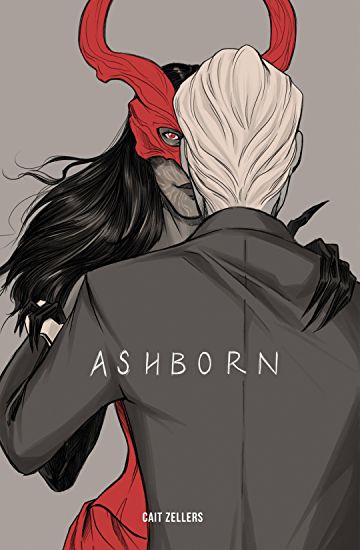
Review: ASHBORN by Cait Zellers

For some, the Cinderella story is a fable of good triumphing over evil; the amiable and gracious is rewarded in the end, winning over the mean-spirited and cruel. For others, it is a repressive tale of the dwindled power of female agency, a concession to the patriarchy’s view of a woman’s value. For the Brothers Grimm, though, it was a story of blood-soaked revenge in which the step-sisters of Aschenputtel are mutilated, their feet hacked to fit into a golden slipper, their eyes pecked out by doves. It’s a grisly tale that is hard to reconcile with the cultural cache of the blue-eyed Disney Princess, friend to a nest of singing mice.

Bippity Boppity Boo.

Cartoonist Cait Zellers has her own take on this classic story. Her new comic, Ashborn, is, like the Grimm Brothers, filled with revenge and blood, but Zellers adds to this the further question of how far one is willing to go for retribution. It asks, “when the Devil reaches out a hand, will you take it?” In Zellers’ telling, the comeuppance at the heart of the story of Cinderella is retained, but, in the end, it leaves the future uncertain and, perhaps, horrific.
Graphic in nature, intent, and execution, Ashborn revels in cruelty. The main character has been humiliated, beaten, burned, and assaulted by those to whom she is compelled to serve. Its “Viewer Discretion Is Advised” label is well earned. Into this, though, Zellers also layers ideas about class and race that speak to our times, adding a depth and immediacy to this period piece so as to speak directly to its audience. It becomes a story about colonization and capitalism, as much as it is about women’s issues.

Zellers’ art is the perfect compliment for what she is doing in Ashborn. Her lines are thin, yet they hold the weight of this story much like surface tension holds the form of a water droplet, quivering, defying gravity. In terms of pacing and layouts, Zellers fully understands constriction and release, moving the action along to heighten both the drama and the emotional intensity necessary for this story to maintain its effect. Ashborn’s palette, too, works to emphasize both the power differences between characters and the suddenness of vengeance. Against a background of beige and gray, Zellers has her red pop off the page abruptly, beautifully, grisly.
Ashborn is evidence of the talent of Cait Zellers to tell a story that transcends its basic premise. Daring to take a well-worn trope and make it into something powerful, she demonstrates that not only does she understand her craft, she understands its potential.